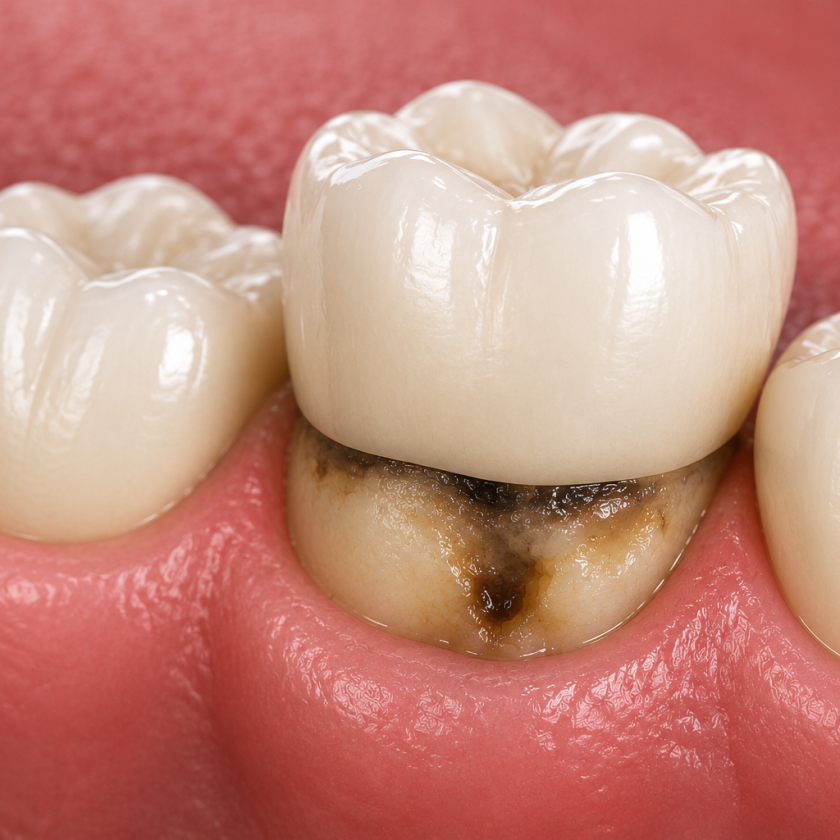
Dental crowns are designed to strengthen and protect teeth that have been weakened by decay, damage or large fillings. However, having a crown does not make the natural tooth underneath completely immune to future problems.
The crown itself cannot develop tooth decay because it is made from materials such as ceramic, porcelain or metal. The natural tooth supporting it can still be affected, particularly around the point where the edge of the crown meets the gum.
How Can Decay Form Beneath a Crown?
A dental crown covers the visible part of a prepared tooth and is securely fixed in place. Although a well-fitted crown creates a strong protective covering, bacteria and plaque can still collect around its margins.
If these areas are not cleaned effectively, acids produced by bacteria can gradually damage the exposed natural tooth. Decay may also develop if an older crown becomes loose, damaged or no longer fits as closely as it once did.
Other factors that may increase the risk include regularly consuming sugary foods and drinks, dry mouth, gum recession and missing routine dental examinations.
What Are the Warning Signs?
Decay beneath a crown does not always produce noticeable symptoms in its early stages. This is one reason why regular dental check-ups remain important, even when a crown appears and feels comfortable.
Possible warning signs include:
- Sensitivity to hot, cold or sweet foods
- Discomfort or pain when biting
- A crown that feels loose
- Tenderness or swelling around the gum
- An unpleasant taste or persistent bad breath
- A dark line or visible change near the crown’s edge
These symptoms do not necessarily mean that decay is present, but they should be assessed by a dentist rather than ignored.
How Will a Dentist Check the Crown?
Your dentist will examine the crown, surrounding gum and the visible edge of the natural tooth. Dental X-rays may also be used to look for changes beneath the crown that cannot be seen during a visual examination.
Finding a problem early may allow the tooth to be treated before the decay reaches deeper layers. The treatment required will depend on the extent of the damage and the condition of both the crown and the tooth underneath.
In some cases, the crown may need to be removed so the decay can be treated. A replacement crown may then be fitted to protect the restored tooth. If the decay has reached the nerve, root canal treatment may be required before the tooth can be restored.
You can learn more about how dental crowns in Harrogate are used to restore the strength, function and appearance of damaged teeth.
How Can You Protect a Crown From Decay?
A crowned tooth should be cared for in much the same way as your natural teeth. Brush twice each day with fluoride toothpaste and clean carefully between the teeth using floss or interdental brushes.
Pay particular attention to the area where the crown meets the gum, as this is where plaque can accumulate. Limiting frequent sugary snacks and drinks will also help reduce acid attacks on the remaining tooth.
Regular dental and hygiene appointments allow the crown’s condition and fit to be monitored. Your dental team may be able to spot early changes before you experience pain or require more extensive treatment.
Do Not Ignore Changes Around a Crown
Dental crowns can provide many years of reliable protection when they are fitted well and properly maintained. However, the natural tooth underneath still requires daily care.
If your crown feels different, becomes sensitive or causes discomfort, arrange an appointment with your dentist. Prompt assessment can help protect the remaining tooth and increase the chances of resolving the problem successfully.